


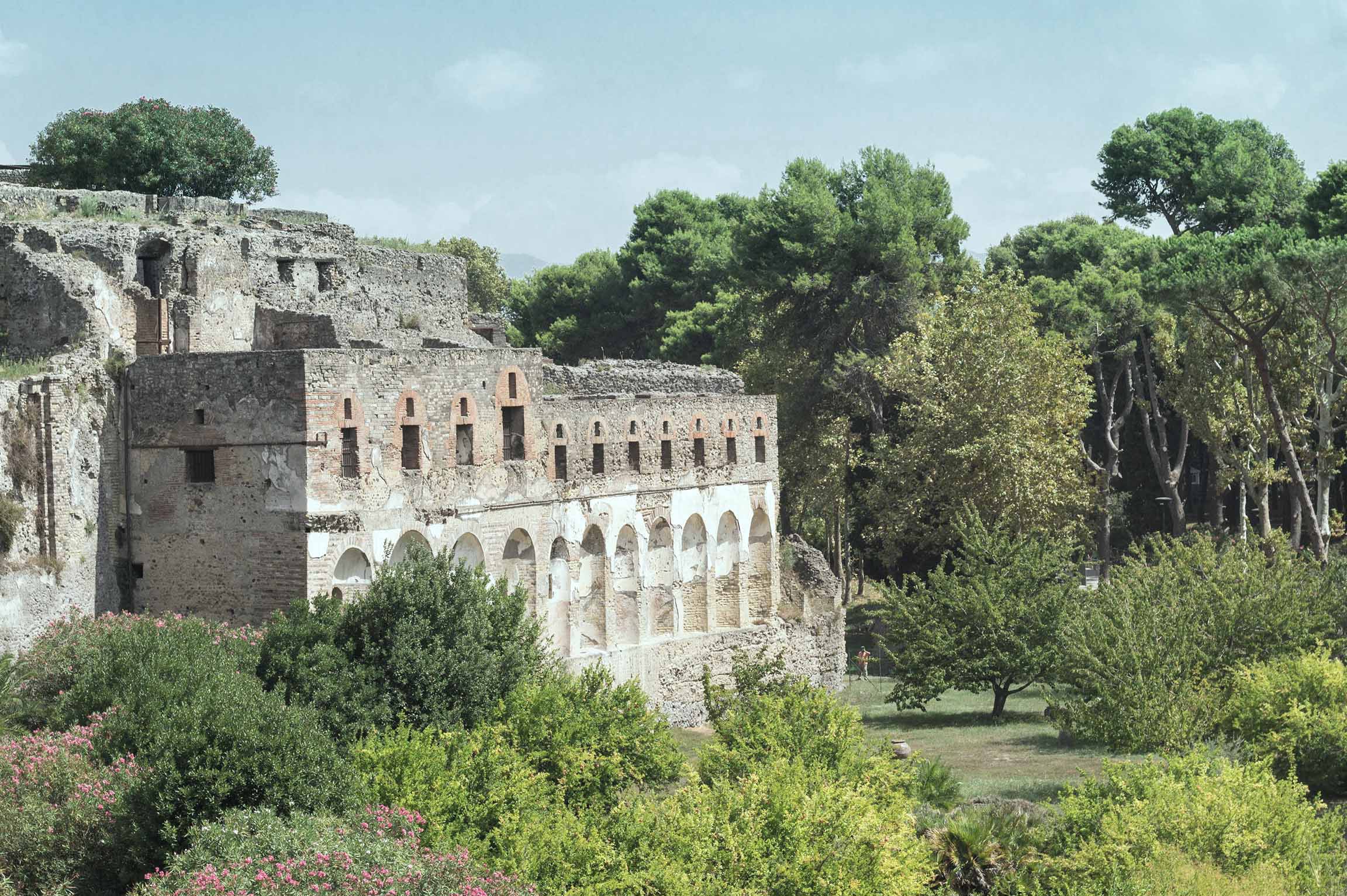
From Sorrento, you can plan an excursion to the archaeological area of Pompeii, Herculaneum, and Torre Annunziata—one of the 58 Italian sites protected by UNESCO’s World Heritage List—the cities destroyed by the eruption of Vesuvius in 79 AD, which have been extraordinarily preserved under a layer of volcanic ash.
Pompeii, located at the foot of Vesuvius, less than 30 km from Sorrento, was a vibrant and bustling city, a flourishing commercial and cultural center. Walking along its paved streets is like stepping into a time machine: houses, shops, theaters, and temples perfectly preserved offer a snapshot of daily life in ancient Rome, while the mosaics and frescoes narrate stories of mythology, domestic life, and more. Next to Pompeii is Torre Annunziata, a lively center built on the remains of ancient Oplontis, once an imperial and aristocratic city also buried by the 79 AD eruption. Its most precious remnants include the still-functioning thermal station and the archaeological site, where excavations at Oplontis reveal the Villa of Poppaea.
Herculaneum, smaller than Pompeii and about 40 km from Sorrento, offers a unique perspective on Roman life: its multi-story residential buildings, perfectly preserved, allow us to understand the architecture and organization of living spaces during the Roman imperial era; in addition, remnants of furniture and particularly evocative objects have been preserved.
Each of these sites possesses its own uniqueness, and together they offer an unmissable panorama of the region’s history and culture.